Analysing focus group data can feel difficult. Audio recordings often aren’t clear or concise, and situational factors such as interaction patterns, moderator influence and participant characteristics can shape the depth and direction of a discussion.
When it comes to analysing focus group data effectively, there are a few elements which are essential:
- Clear Analytic Frame: Because focus group data is shaped by interaction, a clear frame is needed to avoid mistaking confidence for importance and to ensure quieter, equally weighty signals are not missed.
- Structured approach: Using a consistent structure allows researchers to track how ideas emerge and shift, testing apparent agreement and revealing patterns across multiple groups rather than relying on memory.
- Measured pace: It is essential not to fix themes too early; instead, the process should allow for moving through material at a pace that supports comparison and informs later decisions.
How Beings supports focus group analysis
Beings has been designed to support effective focus group analysis, as an AI co-partner that allows researchers to capture, organise and interrupt data. Due to Beings’ superior (and free!) audio transcription service interpretation remains closely linked to the source data, and every part of analysis is linked to a timestamp.
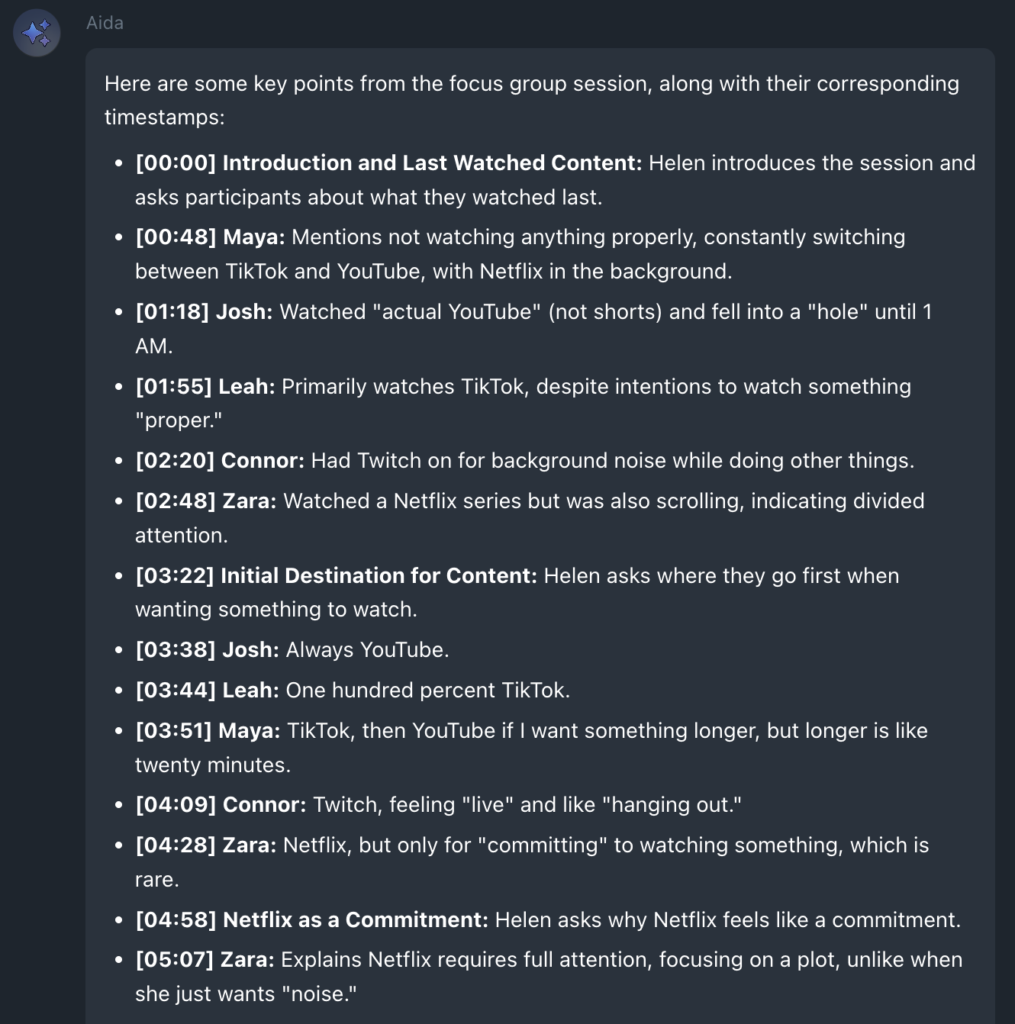
Secondly, Beings offers the ability to invite Aida (the AI engine) directly to the focus group sessions as they happen. When Aida joins the focus group calls, the transcript is even more accurate as Aida is able to directly understand the different participants and correctly identify speakers throughout the audio or transcript (even when PII is removed).
Beings does not replace interpretation or judgement. It supports analytical thinking by making it easier to surface patterns, identify quieter but relevant voices, and revisit earlier material.
This allows qualitative researchers to effectively analyse focus group responses.
How to analyse focus group data effectively with Beings
The steps below outline a practical way to work through focus group data in Beings, from the first pass review to defensible themes.
1. Upload your focus material into Beings, or invite Aida to focus group sessions
Add your focus group files to Beings by inviting Aida directly to the focus group sessions by calendar invite, or by uploading an audio, text or PDF file into your Beings workspace. Make sure to include any context that will matter later, such as the research aim and any materials used during the session. This keeps the analysis anchored to why the discussion took place, not just what was said.
2. Do a first pass for meaning and interaction
Begin the analysis by using the prompt suggestions to ask Aida, Beings’ AI-engine, to uncover top-level themes and similarities, which will reduce the chance of human biases affecting interpretation, and likely reinforce what you already know.
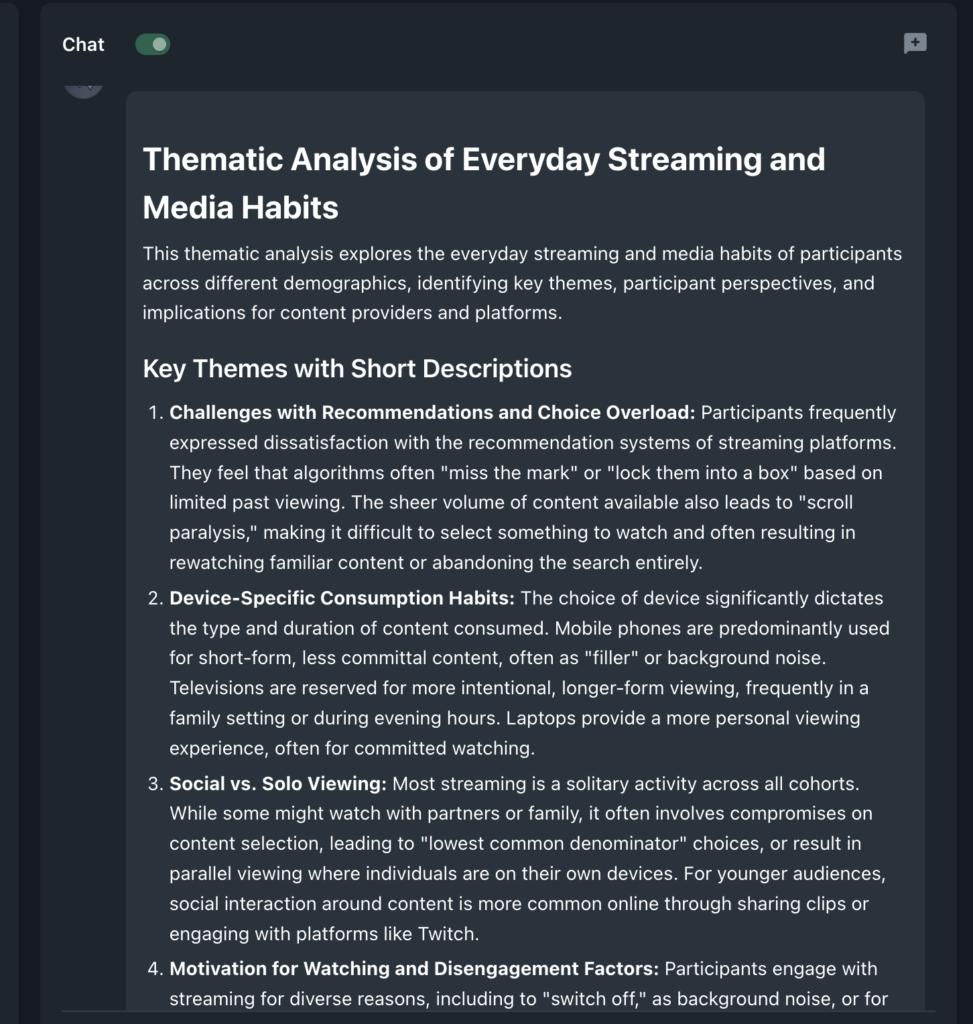
3. Revisit, refine and keep nuance visible
As patterns begin to emerge, use Aida to look more closely at similarities and differences across the focus group data, including where expected patterns do not appear or where views actively contradict each other. These anti-patterns can be as revealing as dominant themes, particularly when comparing different cohorts or segments.
4. Track influence, dominance and contrast without forcing conflict
Review how ideas gain momentum across the discussion. Look at where early contributions shape later responses, where some voices carry more weight and where contrast appears through framing or emphasis rather than direct disagreement. All the analysis is linked back to source quotes and moments in the transcript inside Beings.. This makes it easy to spot-check ideas against the original transcript and audio files.
5. Prepare Outputs With Traceability
Finally, use Aida to translate themes into summaries or stakeholder-ready outputs. Keep a clear link between each theme and the discussion segments that support it so the conclusions remain transparent and grounded in participant contributions.
FAQs on focus group analysis
How is focus group analysis different from one-to-one interview analysis?
Focus group analysis examines how ideas emerge through interaction between participants rather than individual answers. Analysis must account for influence and group dynamics.
What should I do if one person dominates the focus group discussion?
Focus on how the other participants respond to the dominant voice rather than weighing it by volume. Use Aida to look for further agreement, qualification, resistance or silence to understand the influence.
Can Beings help me track themes across multiple focus groups?
Yes, Beings allows you to upload all of your focus group transcripts into one project. Before analysing with Aida, you can “select” whichever sessions you want to review, allowing you to track themes across multiple focus groups.
Start your Focus Group Analysis in Beings
Beings supports qualitative researchers to effectively analyse focus group data, staying grounded in how discussions unfold and how evidence holds together as they move from conversation to clear, well-supported client reporting.
Start your focus group analysis in Beings and explore the process with a free account.