
Focus group transcription is the process of turning multi-speaker discussions into clear text that you can analyse. Customer groups move fast, people talk over each other and the conversation rarely follows a tidy path. This guide explains why accurate focus group transcription matters and how to accurately transcribe customer focus groups to produce reliable transcripts.
How AI Helps To Accurately Transcribe Customer Focus Group Recordings
AI has changed how researchers approach focus group transcription by turning long focus group discussions from audio to text, quickly and with a level of accuracy that used to take far longer when done manually. Using AI, a focus group transcript can be created within minutes, which lets you move straight into the part that supports the analysis rather than spending hours replaying the call.
This shift has reshaped the manual vs AI transcription for focus groups decision. Manual work still helps in short unclear moments, or in places where several voices blend, but is no longer the default. Most of the session is handled automatically, and researchers step in only when something specific needs confirming.
Beings supports this by recording the session directly through Aida, an AI co-partner tool, which can be invited directly to Teams, Google Meet or Zoom calls, or by allowing you to upload video and generate transcripts after the event. This ability of automatic transcription, in a tool designed specifically for research, ensures that each voice is captured accurately across any focus group conversation. Giving you a transcript that reflects how the group actually sounded and reduces the preparation needed before coding or deeper interpretation. It also means teams running several groups in the same project can move through the material more quickly without losing structure or nuance.
This combination of fast transcription and light manual review gives researchers a more workable path when shifting from recording to the insight stage. This is especially useful when time is tight or when groups produce a large volume of material.
Why Focus Group Transcription Is More Complex Than One-to-One Interviews
Focus group transcription is more demanding than transcribing a one-to-one interview. Participants talk to each other, not just to the person moderating the call, which can create issues such as overlapping speech, quick interruptions, difficulty tracking who said what and shifts in direction that can be difficult to follow on a recording, or when taking manual notes. Voices also often blend when people react simultaneously, and individuals may switch between agreeing, disagreeing, or shifting their views, building on what others have said with little warning. This is all common and adheres to a number of well known psychological and sociological phenomena such as Groupthink developed by Irving Janis
Speech quality and consistency can also vary widely within a single session. Some participants speak quietly while others may speak quickly, with informal or incomplete phrasing. Accents, background noise, side comments and many other factors can add to this complexity. These elements can make it harder for both manual transcription and even some automated tools to separate who is speaking and what is being said.
Because of this, focus group transcription requires more careful thought and preparation. There is a need for closer listening and a workflow that ensures that details aren’t lost in the mix. Accurate customer insight depends on capturing the discussion in full, even when it moves unpredictably.
How Beings Helps Teams Transcribe Customer Focus Groups
Beings helps qualitative teams capture focus group conversations clearly and reduces the amount of manual work required to prepare a transcript for analysis. One of the easiest ways to capture the full detail of a customer group is to record it through Beings. This is as simple as “inviting” Aida, Beings’ AI co-partner tool, to the focus group in question. Once invited, Aida will record, and accurately transcribe, the call, adding it to your project repository.
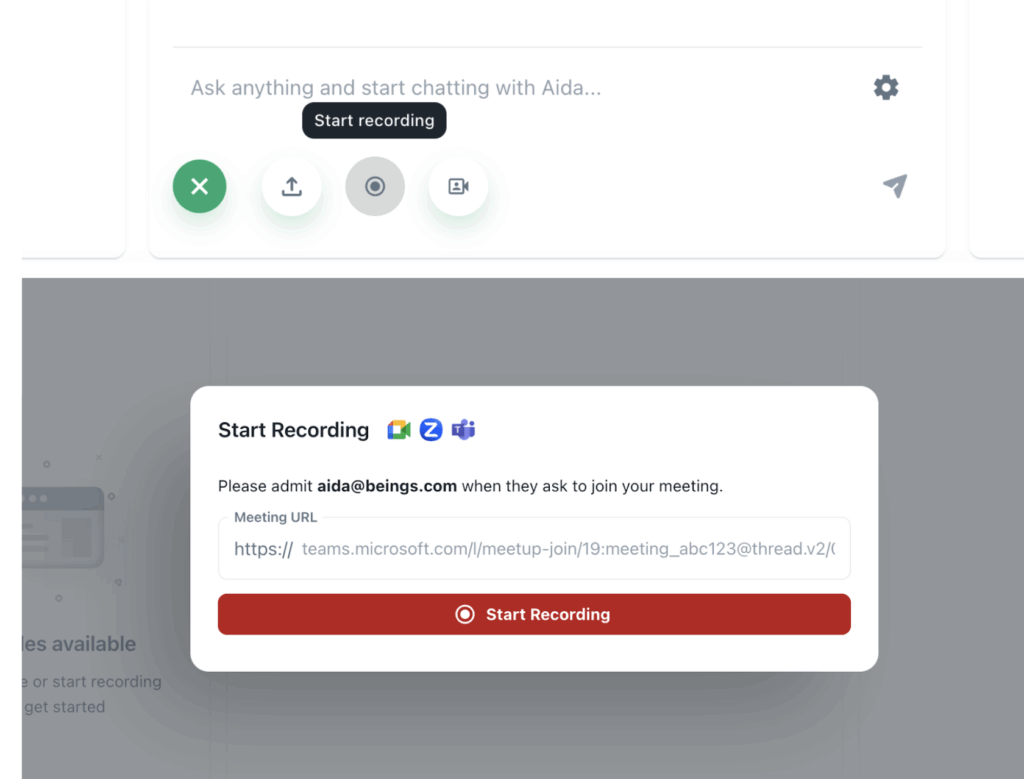
Designed specifically for researchers, Beings is shaped around the natural flow of group discussions.
Customer groups often move quickly, and Beings supports this by placing the transcript inside the same project where the rest of your research sits. Once Aida has recorded a session, or you have uploaded the session video to the project within the Beings dashboard, the transcript is generated with speaker labels and time stamps that map directly to the points Aida can reference later in the project chat. This means that everything is tied together; documents, videos, audio files, transcripts, and PDFs, rather than leaving you with isolated files in a generic meeting inbox.
Because the transcript includes the natural flow of the discussion, including reactions, you can stay close to what was said when you move into analysis. These details become useful once you begin asking Aida to highlight themes, compare viewpoints or surface examples across one, or several, focus groups.
When the transcript is ready, you can download it to check names and turns. The same transcript also sits inside the interface, which means you can explore the session without replaying the audio or video. Aida draws from the full recording and the underlying transcript to answer questions and direct you to relevant sections. If anything needs adjusting, the download gives you a simple way to review it before you move onto analysis.
What makes this so different from a general AI meeting assistant is that the transcript is only one part of the workflow. With Beings, it feeds directly into the wider project, sitting alongside your documents, recordings and notes, so you can move from focus group to theme development, or cross group comparison without switching tools or rebuilding context.
How to Transcribe Customer Focus Groups Step-by-Step
Once you understand why accuracy matters and what gets in the way, the next question is what to actually do with a real recording in front of you. This section walks through a simple sequence you can follow with Beings, to quickly get to accurate focus group transcriptions.
Step one: prepare the session
Confirm participant names, check audio settings and remind people to pause before responding. For remote groups, make sure the platform is capturing the call through Aida. For in person sessions, a central microphone supported by a second device helps balance the room.
Step two: save and label the file
Once the group ends, check that the recording is saved correctly. Use a clear naming pattern that links to the project, date and group number so the files stay organised across multiple sessions.
Step three: upload the recording to Beings
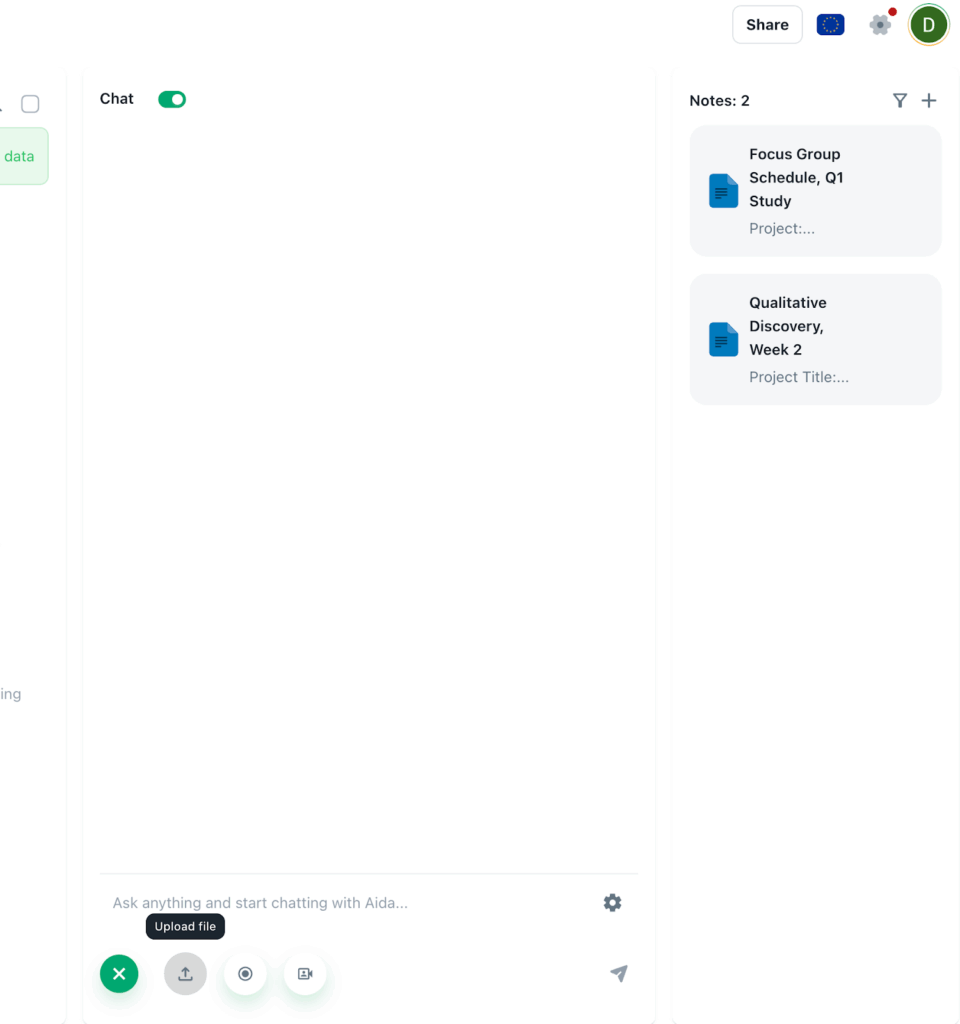
Add the audio or video file to Beings. The system processes it and produces a downloadable transcript. You can also examine the content through Aida by asking questions once the file has been ingested.
Step four: download the transcript for review
You can download the transcript once Beings has processed the file. This gives you a clear space to check names, speaker turns and any moments that may need a second listen. It is a simple stage in the workflow and helps you prepare the material for analysis in whatever format you prefer.
Step five: look at early themes with Aida
Once you have the transcript, you can use Aida to begin testing early ideas from the group. Ask Aid to summarise, about recurring topics, any shifts in viewpoint or particular moments that shaped the direction of the discussion.
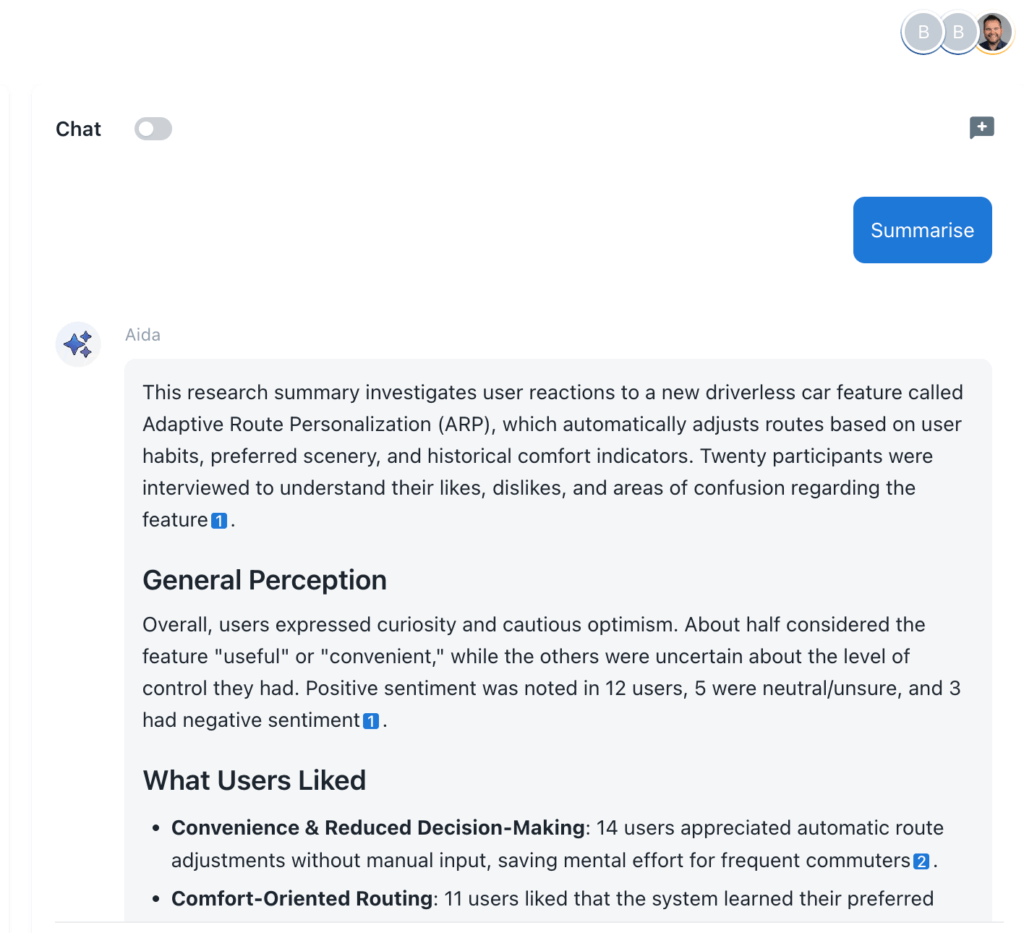
Aida will then point you to the relevant parts of the session. This then keeps your early interpretations grounded in the source material without scouring through long audio or video clips.
FAQs on Focus Group Transcription
Do I need video as well as audio for a focus group transcript?
Audio is usually enough. Video helps with nuance, but most teams work comfortably from audio alone.
How tidy should a focus group transcript be?
Keep it readable but natural. Remove small distractions and keep the original phrasing so the group’s tone stays intact.
Can AI handle mixed voices in a group?
Most of the time, yes. Moments with very fast overlaps may still need a quick manual check.
Is manual transcription still needed at any point?
Only for unclear audio or sensitive moments that need confirmation.
How should I store transcripts after they are created?
Beings sends a link to transcripts via email, and allows you to store all transcripts from a single focus group session in a project repository which can be accessed across users.
Can I upload recordings to Beings instead of adding Aida via email?
Yes. You can upload audio or video files from in person groups or from platforms like Google Meet and Zoom directly into Beings for transcription and analysis.
How do transcripts fit into the Beings workflow?
Transcripts are downloaded, which keeps your project tidy and lets Aida focus on analysis instead of displaying long blocks of text. You review the transcript in your workspace, then use Aida to navigate the session and link insights back to the moments that matter.
Can I transcribe several focus groups at once in Beings?
Yes. Each file is processed separately and you can explore them side by side through Aida.
Does Aida understand the whole conversation when I ask questions about a group?
Yes. Aida works from the full recording and can answer questions about themes, viewpoints and specific moments.
Start Transcribing Your Customer Focus Groups with Beings
Accurate focus group transcription should not slow a project down or take energy away from the work that matters. Beings gives researchers a simple way to capture group discussions, download clear transcripts and explore the sessions through an intelligent AI co-partner without getting stuck in admin.
If you want to make transcription easier across all your customer groups, you can try Beings and see how it fits into your workflow. Recording through Aida, your research co-pilot,or uploading your own files takes only a moment, and you can begin reviewing and analysing your sessions straight away. You can create your account and start transcribing your next focus group here.