AI Strategy
Why Your AI Never Finishes Anything
Ask most business leaders what "using AI" looks like across their organisation, and the candid answer is almost always the same: someone opens a browser tab, types a prompt, reads a response, and maybe asks a follow-up.
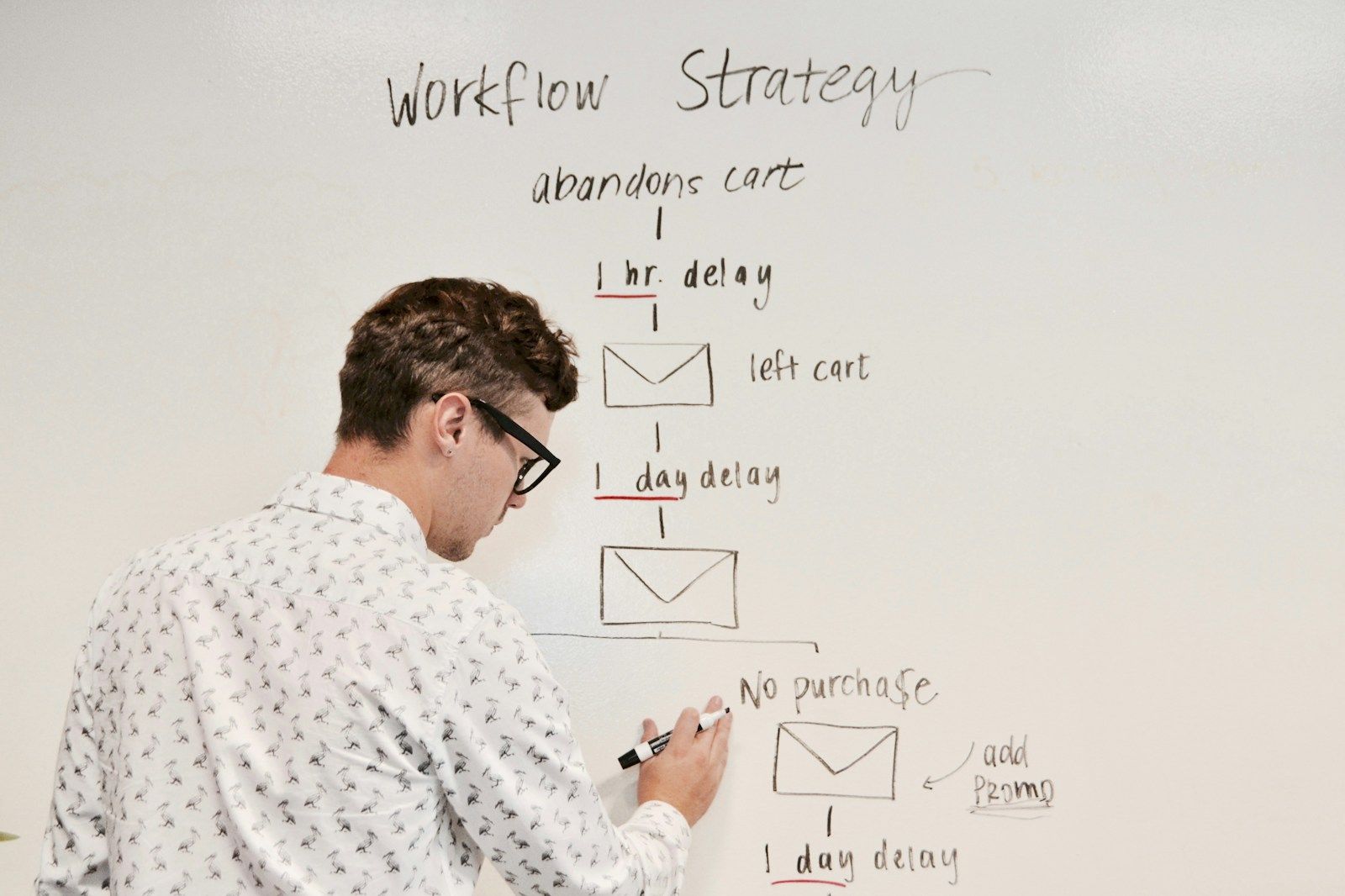
It's fine as far as it goes. But let's be honest — paying for individual seats so your team can write faster emails or summarise meeting notes isn't an "AI transformation." One quietly awkward side effect of relying purely on conversational chatbots is how sycophantic they are: fine-tuned to please whoever's typing, they nudge teams toward the same safe, generic answer rather than a genuinely useful one. Meanwhile the real gap sits wide open — the distance between asking a chatbot to summarise a document, and building a system that actually executes work on your behalf while you're not watching.
The value gap: high adoption, thin returns
The scale of adoption isn't in question. McKinsey's State of AI 2025 survey — fielded June–July 2025 across roughly 1,993 respondents in about 105 countries — found 88% of organisations now use AI regularly in at least one business function, and 72% use generative AI specifically, up from 33% the year before (McKinsey, 2025). A year on, McKinsey's State of AI 2026 survey — fielded May–June 2026 across 1,719 respondents in 97 countries — shows the scaling picture is still thin: no more than 10% of organisations report scaling agentic AI in any single given business function (Forbes, citing McKinsey, 2026). Large enterprises are pulling ahead of that average — 40% of organisations with over $1 billion in revenue now report scaling AI agents, up from 27% a year earlier — but enterprise-wide EBIT impact remains modest even there: just 37% report any impact at all, essentially flat versus 2025 (McKinsey, 2026).
Everyone's chatting with AI. Comparatively few have let it finish anything.
That gap holds in the UK's smaller-business segment too. A March 2026 survey of UK firms (94% of them SMEs) by the British Chambers of Commerce and Atos found AI use has climbed fast — 54% now actively use AI, up from 35% in 2025 and 23% in 2023 — but the impact on how those firms actually operate is still thin: 95% of AI-using SMEs report no change to workforce size over the past year, and 86% say job roles have stayed the same (BCC/Atos, 2026).
Why the gap isn't a capability problem
The distinction that matters isn't how capable the model is. The same model sits behind a chatbot and an agent — what differs is what the system around it is allowed to do.
A conversational tool waits. You ask, it answers, and the loop ends until you type again. An agentic system keeps going: you hand it an objective — reconcile these invoices, triage this inbox, publish and monitor this content — and it plans the steps, pulls in what it needs, checks its own work, and only comes back to you for a genuine judgement call.
So why has nearly everyone stopped at chat? Ask a business leader directly and it usually comes down to one thing: they don't trust what happens to the data once an agent has real access. And that hesitation is correct — most of what an agentic system needs to actually finish something is exactly the data you can least afford to hand a third party. Reconciling invoices means real access to your banking feed and your accounting system. Triaging an inbox means reading everything in it. Managing payroll submissions means the most sensitive employee data your firm holds.
That's not a workflow problem you solve by picking a smarter model. It's a control problem, and it's why so many agentic pilots stall the moment they'd need to touch something that actually matters.
What agentic AI workflows look like once the access problem is solved
None of the examples below are hypothetical — they're the kind of thing already running:
- Finance & ops. An agent watches the banking feed, searches email for the matching invoice or receipt, reconciles it against Xero, and prepares payroll submissions — instead of someone manually cross-referencing spreadsheets.
- Content. An agent drafts and publishes, then runs its own scheduled checks against performance data and suggests what to adjust — instead of a person prompting a chatbot for one post at a time.
- Communication. Email, tickets and internal threads get triaged and synthesised before anyone logs on, surfacing only what actually needs a human.
None of this works without the system being given real, governed access to the tools where the work lives — not a chat window with no way to touch anything. And none of it is safe to build unless you know exactly where that data goes once the agent has it.
That's the actual reason this is Beings' answer, not just a feature of it: the agent runs on infrastructure you control, not a vendor's cloud. Nothing your banking feed, your payroll system or your client records touch leaves the building. The boundary — not the model — is what makes it safe to give an agent the access it needs to finish something real.
Getting there
Building a workflow that lasts isn't a plug-and-play install. It takes:
- Mapping how the work actually happens — with the person who does it, not the process document that describes it.
- Real system access, properly governed — the banking API, the CRM, the payroll system, permissioned to what the task needs and nothing more.
- A human checkpoint that's deliberate, not incidental — a genuine judgement call or compliance sign-off, not "someone happens to be the one clicking send."
You don't need to rebuild the whole business at once. Pick the one process eating the most hours today, and start there.
Ready to move past the chat window? Take the free AI Maturity Assessment, an agent walks you through it in minutes, or get in touch to map out your first workflow.
